
A Reflection on Revelation 4-5
[I’ve decided to share some of our current series on Revelation at Lena Free Church, specifically the sermons on chapters 4-5. This is the manuscript of the sermon I preached on May 4th, 2025. You can listen to the audio here. Subscribe for more!]
I was translating the passage this week, taking my time over the words of these two chapters of Revelation, when I was overcome by their beauty. In particular, the moment when “myriads of myriads, thousands of thousands,” μυριάδες μυριάδων καὶ χιλιάδες χιλιάδων of angels shout out in a loud voice,
Worthy is the lamb who was slain
to receive the power
and riches
and wisdom
and might
and honor
and glory
and blessing! (5:11-12)
Revelation 4-5 are overwhelming both in what we are shown and how we are shown it. The more you meditate on them, the more overwhelming they become. They are dizzying. Read slowly, and the heart begins to beat faster, the pulse quickens, the eyes start to glaze over, and you start to wonder if you can handle the vision, handle the beauty, handle the glory.
It reminds me, actually, of what is called “Florence Syndrome.” Every year, visitors to the Italian city of Florence start to experience “dizziness, palpitations, hallucinations and depersonalization upon viewing works of art.” Some begin to weep. Others get sick. One man even had a heart attack at the Uffizi Gallery standing before Botticelli.
Why? One writer describes the experience:
“I was in a sort of ecstasy from the idea of being in Florence…I was seized with a fierce palpitation of the heart…the well-spring of life was dried up within me, and I walked in constant fear of falling to the ground.”[1]
The sheer beauty of Florence, in every corner of that city, overwhelms, shocks, and can even cause a mental breakdown.
Often, when people are given a vision of heaven in the Bible, they experience what we might call “heaven syndrome.” Daniel was given a vision similar to Revelation, and he tells us that the result was “I…was overcome and lay sick for some days…I was appalled by the vision and did not understand it…my color changed…my thoughts greatly alarmed me…”(Daniel 8:27, 7:28).
There is a danger, then, of daring to speak of heaven. The danger is that you will never be able to think the same about the world again. The danger is that you will be overwhelmed by what you hear. The danger is that heaven will invade your imagination, your thoughts, your very body, and your life will never be the same.
Speaking of Another World
As I read Revelation 4-5, I am reminded of what Paul said when he saw heaven. He tells us that he was caught up into “the third heaven,” that is, the heaven above the sky, the place beyond the place, and he writes in 2 Corinthians 12:4 that “he heard things that cannot be told, which man may not utter.”
John too sees things that can’t be told, but is commanded to tell them. He struggles to describe them. He uses the words “like” “as” 17 times in these two chapters. “It was like an emerald.” “The Lamb looked as though it had been slain.” These similes push us into the world again of figurative language, symbolism, doing our best to describe things that are not of this world. Talking this way is like using a shell to describe an egg, or a bone to describe a leg – you get some of the idea, but not the full picture.
The reason you can’t get the fullness of what John sees is because he is speaking of another world; of the place we call heaven. 4:1 begins, “after this I looked, and behold, a door standing open in heaven.” The word “heaven” here means another realm, a place beyond the sky. To the first readers of the Bible, the physical world was understood in three vertical planes: the heavens, the earth, and below the earth (5:3). The heavens was further divided into three planes: there was the “first heaven”, which was the sky you could see, then the “second heaven” which was the stars and planets, and then finally the “third heaven,” the place beyond the stars where God dwelled.
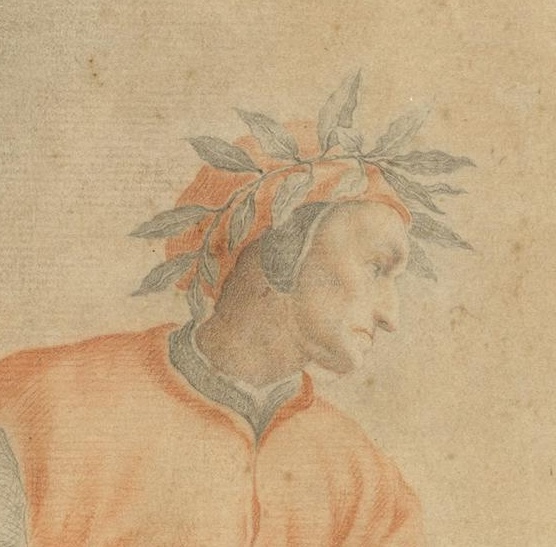
John sees a door opening up to this third heaven. He tries to tell us what it is like, but he struggles. I am reminded of my poetic hero Dante, the fourteenth century poet, who wrote his own description of heaven called Paradiso. As Dante approaches the throne room of God, he says, “here ceased the powers of my high fantasy,” that is, even he, the poetic master of metaphor, can’t describe what that place is really like.
Our powers of description fail to get at the full picture of heaven. Too often the word “heaven” has become a shallow word, and the hope of heaven a kind of simple hope. But John’s vision here is not simple, not simple at all. It is intricate, complex, varied, and overlapping. It is the whole of which we are only a part.
That’s the other world we call heaven.
What is this other world like? My words will fail me, but I want to leave you with two reflections:
First, Heaven is full. It is a full place. There is the fullness of God there, not as here, where sin makes him hide his face. Notice that God the Father is there (“he who is seated on the throne”), God the Spirit is there (“The seven spirits before his throne”, 4:5, see 1:4), and God the Son is there (“a Lamb as though it were slain”).
There is a fullness of color and light there. God himself has the color of “jasper and carnelian,” and the throne is surrounded by a rainbow circle “the appearance of emerald.” A sea of glass bright as crystal.
Heaven is full of beings: twenty-four “elders,” four “living creatures” who themselves are full of eyes, and then “myriads of myriads, thousands of thousands” of angels, and then in some also there is present “every creature in heaven and on earth and under the earth and in the sea and all that is in them” (5:13).
Heaven is also full of sights, sounds, and smells. It is a sensory place. The peals of thunder, the flashes of lightning, the flaming torches, the harps playing new songs, the bowls of incense, the angels shouting in a loud voice.
Finally, heaven is full of worship. The whole rhythm of heaven is worship. Interestingly enough, the word for “worship” is used in the book of Revelation 24 times, the same amount of elders who fall down and worship before the throne and the Lamb who was slain.
We live in a half-filled place. Everything that exists here is but a shadow of the fullness of heaven. Heaven’s beauty overwhelms the senses because to see heaven is to realize that what is down here below is nothing but a picture of the fullness there above. And this creates a longing in you, when you know there is more, a restlessness.
Second, heaven is always new. Notice that John says in 4:9 that “whenever the living creatures” begin to worship, then the elders throw down their crowns, fall down, and worship. So, heaven has repeated things that happen. It is not “timeless” in the sense that time doesn’t exist there, but it exists in a different kind of time, a different way of existing in time.
What is this different time like? Well, here’s where I’m going to stretch your mind a bit. Heaven is sempiternal. The word “sempiternal” is different from “eternal.” It comes from the Latin semper, like the Marines say semper fidelis, “always faithful.” Semper means “always,” and it is mixed with the word eternal. The result is a word talking about time (semper, always) and a word that describes being timeless (eternal) mixed together. Therefore sempiternal means always new, or always eternal. Heaven is a created place. Before creation, God just is, and he chooses to dwell in heaven as his throne room. So we have in heaven the eternal God dwelling in a created place. The timeless invading time and making it ever new.
Why is this important? Because of the oft-repeated idea that heaven, as portrayed here, will be boring. Mark Twain famously said that heaven, as shown in Revelation, has nothing of value to men because “most men do not sing, most men cannot sing, most men will not stay where others are singing if it be continued more than two hours.”[2] But notice that the elders are singing a “new song” (5:9). We might say a Sempiternal song.
Augustin in his confessions, all the way back in the fourth century, caught onto this. He calls God’s Beauty “ever ancient, ever new.” We contrast new with old, but in heaven old and new combine in one eternal flow flowing ever new. Heaven is like an ever-growing mountain, or wheels within wheels within wheels (Ezekiel 1:16), and each rotation is new, and each peak is new, but also ancient, also eternal. Isn’t that amazing? What will that be like for the timeless to take place in time?
You know, in part, what heaven is like if you’ve ever been in love. Not just romantic love, but any deep, true, love for another person. Love like that can bring us out of time (as can music). When you behold your loved ones, and see your own reflection in their eyes, and for a second are fully conscious, fully present, you find that it does not matter what came before or what comes after, for love deepens every look, lengthens every touch, sweetens every smile. And that moment becomes wheels within wheels within wheels and it feels like an eternity in itself.
But then, you are brought back to earth. And loved ones die. And love withers. And we wither. And longing takes the place of love. If you’ve ever loved deeply, such love is a whisper, a hint, a calling to heaven, a calling to the God who is love (1 John 4:8). Ever ancient, ever new. Behold! A door standing open in heaven. And a voice calling you, “come up here and experience my love for the first time, every time for the first time.”
Taking time to look to heaven turns us into different people. For God’s presence is the place for which we were designed.
I mentioned Dante’s description of heaven. He gets to the throne room of God, and this is what he ends with:
…the truth I longed for came to me,
Smiting my mind like lightning flashing bright.
Here ceased the powers of my high fantasy.
Already were all my will and my desires
turned—as a wheel in equal balance—by
The Love that moves the sun and the other stars.Paradiso, XXXIII, 140-145, Anthony Esolen Translation
[1] Quoted in Stendhall Syndrome: The Travel Syndrome that Causes Panic, BBC, (https://www.bbc.com/travel/article/20220110-stendhal-syndrome-the-travel-syndrome-that-causes-panic)
[2] Mark Twain, Letters from Earth, ed. Bernard DeVoto (Greenwich, CT: Fawcett, 1962), 16-18, as quoted in “The Distant Triumph Song: Music and the Book of Revelation”, Craig R. Koester, (Word & World, XII:3, 1992), 243.


 Revival and Renewal
Leave a comment