
I hate our doorbell.
Before we bought our house I never once rang the door, but now it is a constant torment.
Why? Well, it’s not a normal, sweet-sounding doorbell. Circa the early 90s, it is a customizable (but wholly unintelligible) electric doorbell system that has been programed to chime the tune (I think) to Joyful, Joyful, We Adore Thee! as if someone was making the sounds on a calculator. And while that’s quaint for a day or two, it gets old fast.
One day I got so frustrated I decided to change it. I climbed up to the box from whence this torment comes and as I opened it up all I saw were strange symbols with buttons, and no button that read “normal doorbell.”
So, what do you think I did? I tried all the buttons! I smashed this button and then that. And then we tried the doorbell again, and to our despair it still played Joyful, Joyful, We Adore Thee! but now it is out of tune and sounded sinister and menacing, like it was being played by the orcs of Mordor. Much worse.
So I did what any rational person would: I got back up there and smashed even more buttons. And then we tried it, and it is (I kid you not) now the scariest alarm sound I’ve ever heard, like if for the last trumpet call they used a synthesizer. The cats run for the hills, terrified now when someone comes to the door. But it’s a mystery: sometimes it’s Joyful, sometimes the orcs are playing, and other times it’s the chime of doom, but it’s never a normal doorbell!
So that’s behind my disdain for the doorbell. But there’s another reason I don’t like the it. It catches me off guard. When I’m going about my day and the doorbell rings, I’m set on edge. We are going about our lives, living in our little castles of our homes. But then, someone’s there, at the door, someone we didn’t expect, and we have a choice:
Will we answer? Will we open the door?
We often look at the story of Jesus entering into Jerusalem as a far-off historical event. But in this scene we see something true about Jesus, a picture of how he enters into each of our lives, our inner Jerusalem. Malcom Guite described this beautifully in his poem “Palm Sunday“:
Now to the gate of my Jerusalem,
Malcolm Guite, “Palm Sunday”
The seething holy city of my heart,
The saviour comes. But will I welcome him?
Oh crowds of easy feelings make a start;
They raise their hands, get caught up in the singing,
And think the battle won. Too soon they’ll find
The challenge, the reversal he is bringing
Changes their tune. I know what lies behind
The surface flourish that so quickly fades;
Self-interest, and fearful guardedness,
The hardness of the heart, its barricades,
And at the core, the dreadful emptiness
Of a perverted temple. Jesus come
Break my resistance and make me your home.
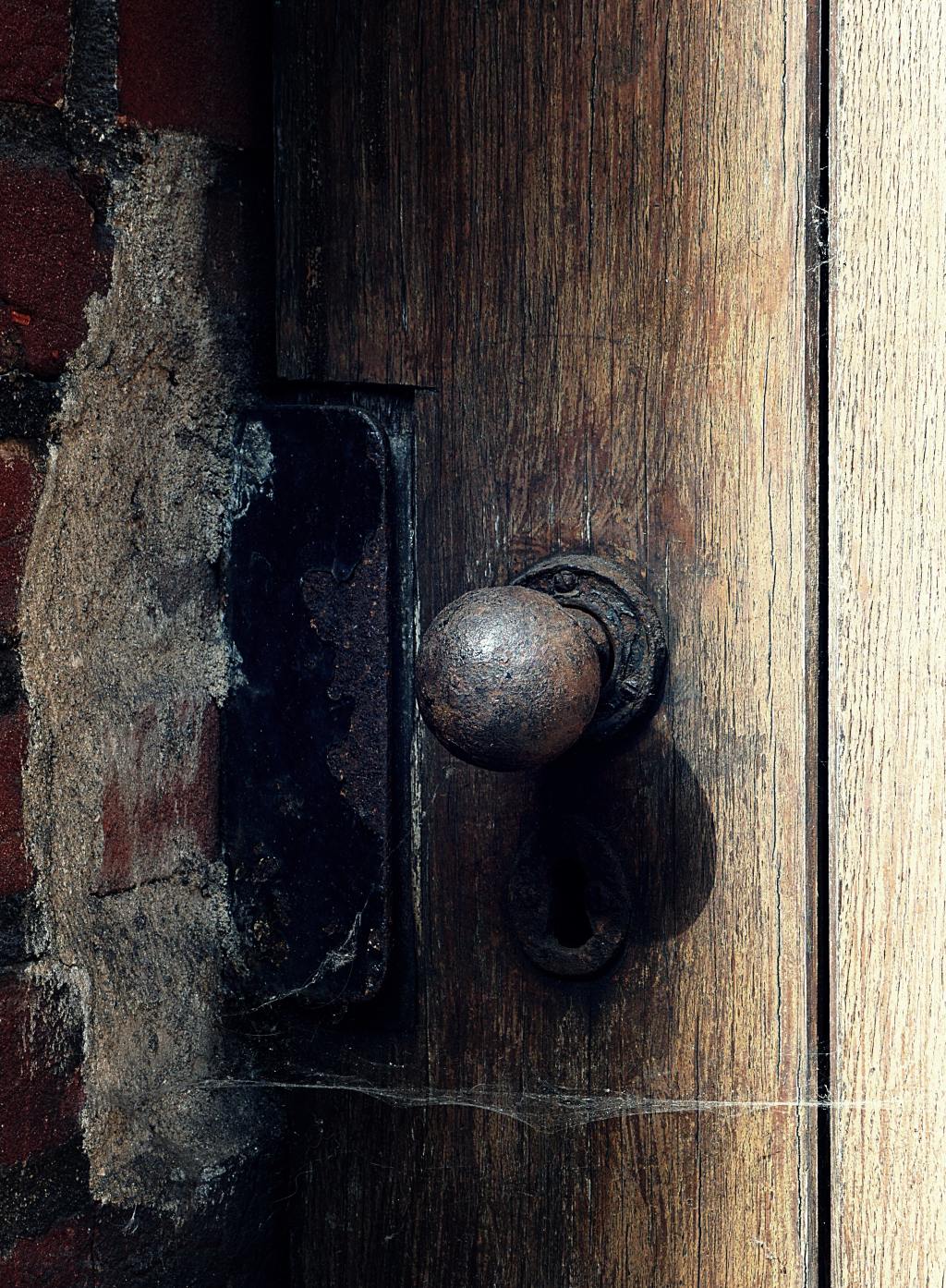
Jesus stands at our door and knocks (Rev. 3:20). We are caught off guard, but now we have a decision to make:
Will I answer? Will I open the door?
That morning when Jesus humbly entered into the city that was his inheritance, he was showing us something we can’t miss: what will happen when he enters into our hearts, our inner cities, those places to which the King has claim.
What happens when Jesus enters in?
He Judges
Jesus comes into the city, and instead of starting a revolution he rages against the temple Bazaar. “It is written: ‘my house shall be called a house of prayer, but you make it a den of robbers!’” (Matt. 21:13). No one seemed to think anything was wrong that the howls of hagglers had replaced holy reverence, that God’s people loved worldly commerce more than worship.
But Jesus sees. And Jesus judges.
That’s what he does in our lives, too. He exposes our sin. He looks at our lives and comes with the blinding light of his truth and goodness. Where we are blind to our sin, he brings the grace of clarity. When we’ve grown complacent and apathetic, he confronts us with his zeal and power. There’s no escaping it; when Jesus enters in, he comes with a word of judgment.
He Cleanses
But that’s not all Jesus does. “And Jesus entered the temple and drove out all who sold and bought in the temple, and he overturned the tables of the money-changers and the seats of those who sold pigeons” (Matt 21:12). Jesus didn’t just expose the sin. He drove it out. Just as he drove out demons when they’d inhabited people (Matt 8:16), he drives out the sin in the temple and cleans house.
When Jesus knocks on the door, he doesn’t just come with a word of judgment; he comes with a mop and a bucket. He cleanses us, transforms us, and makes us holy. He does this through that first and total washing of regeneration, being born “by water and the Spirit” (John 3:5, see Ezekiel 36:25-27) when we first believe.
But there is also the deep cleaning that happens as more and more of our lives are surrendered to Christ. We often think that when we come to Jesus, he’ll just clean us out once and we’ll be good to go. But our hearts and lives are much more wrapped up in the world, the flesh, and the devil than we realize. The air we breathe is dirty, and our lungs are full of the soot of sin.
But Jesus promises to clean us completely. The theologians call this progressive sanctification. Jesus finds those hidden sins, those doors we’d rather he not open, and he gets cleaning. So be ready: if you open the door to this King, no room is off limits. He will not just expose your sin, but will clean it out, transforming you by the washing of grace.
He Heals
“And the blind and the lame came to him in the temple, and he healed them” (Matt. 21:14).
Jesus comes into our lives, not just with a word of judgment or a mop and a bucket. Jesus comes with bandages to heal. He promises healing to every last ounce of our lives. Our bodies are promised healing by his brilliant resurrection and the certainty that he will “transform our lowly body to be like his glorious body” (Phil. 3:21) on the last day.
But Jesus promises healing to our souls too. The psalmist rejoiced that the Lord “heals the brokenhearted and binds up their wounds” (Ps. 147:3). Jesus is constantly, incessantly turning the bitter things sweet, turning our mourning into dancing, offering rest to the weary, joy to the sorrowful, grace to the sin-sick, and comfort to the afflicted. He is a healer.
Why? Because we are soul-sick people. Our wounds and scars extend into our inner person. We may try to hide our limps from Jesus, pretend everything is fine, but he sees the depths of our pain. He walks those dark corridors of our minds, sees those feelings we’d never share with anyone, and softly says to us: “Come to me, all who labor and are heavy laden, and I will give you rest.” (Matt. 11:28). He comes to us, bandage in hand, and wraps our wounds with mercy, spreading on our scars the ointment of grace. And he holds us while we cry, whispering in our ear, “behold, I am making all things new.”
Hosanna!
Jesus is at the door. If you let him in, this is what he’ll do: he will judge, he will cleanse, and he will heal.
Do you hear him knocking? What will you do? If you want what he offers, the answer is simple: Run to him, open the door wide, and cry out:
“Hosanna! Blessed is he who comes in the name of the Lord!”
[This is an abbreviated version of a sermon I preached at Village Church of Lincolnshire on April 2nd, 2023.]

 Revival and Renewal
Leave a comment