
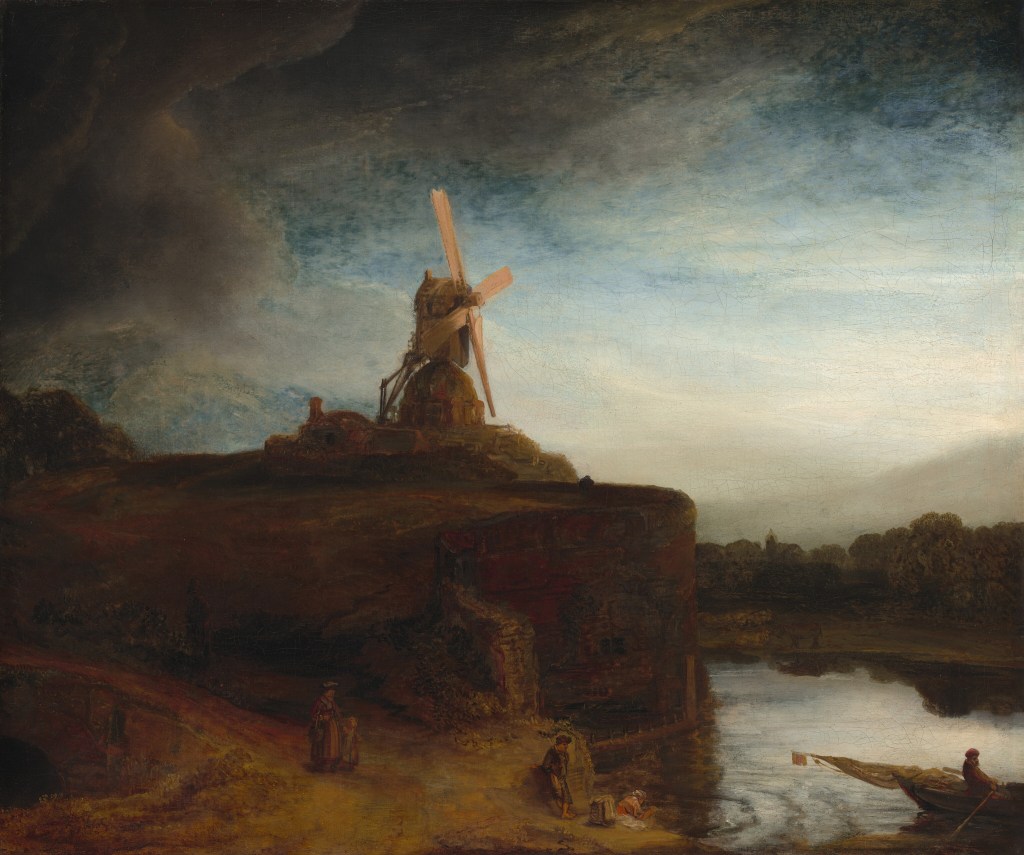
“If God made the birds, they are worth painting.” –Francis A. Schaeffer
Christian Art.
That phrase confuses me. It always has. I’ve met artists who are Christians, and Christians who make art. I’ve heard plenty of lectures and read many books on beauty. I’ve drawn the pictures of Jesus, or Job, or the Nativity, only to be dismayed that the result looked neither very Christian nor very artful. Try as hard as I might, I couldn’t discern what was truly Christian art.
I think one reason I can’t figure this out is an inherent tension in how evangelicals respond to art, and how modern artists tend to respond to God. I’m yet to meet an artist whose work I admire who doesn’t believe in God. There’s been points when I’ve read books by Julia Cameron, for example, and exclaimed “truly you are not far from the kingdom of God!” But, as a rule, I’ve found that artists are not very good at talking (and thinking) about God, and evangelicals are not very good at talking (and thinking) about art. Artists love to talk about God as the Great Creator, the Spirit of inspiration, the power of creativity. But that creativity is often really in service of the artist. Much of modern art serves to praise the creativity, ingenuity, or insight of the one making it. The focus is not on that Spirit and Creator who inspires, but rather the inner subjective world of the painter or sculptor. And, interestingly, the resulting art tends to look very little like the original Creator’s work, and much more like the artist’s world unto themselves.
But, if artists tend not to know what to do with the God they can feel intuitively, evangelicals don’t know what to do with the mystery and the beauty that is art. We feel that the only “good” art is that which focuses either on religious subjects or is devoid of all gritty reality. Furthermore, art seems flippant, wasteful, even disobedient, when eternal salvation lies at the door. Shouldn’t Christians be spreading the gospel, teaching the Bible, and helping the poor instead of painting pictures?
Art scares us. You could look to many sources in church history for this fear, but I think one such reason is the suspicion toward images in the evangelical mind. We evangelicals have made it a goal to evacuate Christianity of any hint of an extravagant aesthetic, and so we look at most art with suspicion and fear. It all seems too fleshy. A tenant of the evangelical ethos (although not evangelical doctrine) is that the “world” holds only danger or distraction for us, and so most art is just frankly dangerous. Art museums are places of temptation, not rapture. We value Thomas Kinkade because he created images that were so removed from the actual world, all this fleshiness, and so we could look without fear of being tainted.
What strikes me today as I read the story of the Tabernacle is how far removed these people are from both our fear and our misguided artists. In the art project that God sets the people on in Exodus, there is no fear of being tainted by the natural world. There is no fear of an extravagant aesthetic. But there is also a keen awareness that the world they are representing in their artmaking is not their own, but rather corresponds to, and honors, the original Creator. As I read these passages, I think in them we can find a vision for art-making that can liberate us from our implicit Manicheism and give us clarity on what it would mean to make art in light of who God is and the promise that is ours in Jesus.
Nature Laden with Gold
“They shall make an ark of acacia wood…you shall overlay it with pure gold.”
Exodus 25:10, 11
There is both an affirmation and a vision in God’s instructions for constructing the objects of the Tabernacle. Over and over again I read that the people of Israel are to make, use, and fashion based on the good creation that God has given them. Whether it is acacia trees, almond blossoms, pomegranates, or fine jewels, the basis for all the “making” of the Tabernacle is nature. Divine order in creation forms the ground for all that comes next.
But the acacia tree is not left alone. When these trees enter God’s presence, they are transformed; they are laden with gold. This overlaying with gold is a kind of symbolic envisioning of a future, a destiny; it is a symbolic representation of what God dwelling on earth would mean to this piece of wood. The coming of God to earth is akin to covering the world in gold: glory comes and brings with it a radiance, a beauty, a glowing transformation.
That’s the tension, I think, in true art: both an affirmation of nature and an invitation to envision that nature transformed. We see this kind of duality show up throughout the narrative. We are invited to imagine what it would mean for all types of things to be in God’s presence: tables, lampstands, flowers, tents, altars, courtyards, oil and incense, pomegranates, washing basins, and even time itself.
The art of the tabernacle is very much of this world. There is no suspicion that modeling lampstands into almond blossoms is a distraction. Rather, there is an affirmation that the world that God made is fit to be the dwelling place of God. The very stuff of reality is invited, not to be destroyed and thrown away, but to be transformed and restored by God’s presence.
But the art of the tabernacle is also very much of another world. It is mystical, in that it is a representation of what in heaven is already true and what will be true of all of reality sometime soon. Through symbols and themes, imagination and representation, a place is constructed that is not just heaven but heaven on earth. It is Eden in the wilderness.
The Shining Face of Moses
“And you shall make holy garments for Aaron your brother, for glory and for beauty.”
Exodus 25:10, 11
The basic vision of the art of the Tabernacle is of the transforming presence of God dwelling with his people. It beckons us back to the original design of creation as God’s temple and speaks of a Day when God’s glory will fill heaven and earth. When God comes down, he brings glory and holy light with him, and that light restores what is broken and endues it with a new glory.
But in the story of the Tabernacle, we get two distinct pictures of how this glory doesn’t just transform things like acacia wood, but humans as well. The Tabernacle space is a fundamentally holy space, a space that only a few can enter in. And the ones who are commissioned to enter in on behalf of the people must be consecrated. They must be made holy.
The ones selected are the sons of Aaron. They were to be consecrated in two ways. The first consecration, to our surprise, is not via the blood of sacrifice, but rather through “holy garments.” They are given radiant white robes and covered with a variety of precious stones laid in gold. On their foreheads they were to wear a plate of gold inscribed with the words “Holy to the Lord.” Their robes were to be adorned with blue and purple pomegranates and golden bells. From head to toe these priests would be visions of luminosity, and the difference between them and the people would be clear as day. In the dust and darkness of the wilderness, these few would show clearly what it meant for people to enter in the presence of God. They are symbols of the human destiny of transformation.
And yet there is another story of transformation in the middle of our narrative. It comes after the disastrous saga that is the golden calf (the ultimate in “false” art). The whole destiny of the people of Israel is in doubt, and it is only Moses’ intercession that saves the whole assembly from destruction. The climax of this story comes when Moses is invited back up the mountain, and God promises to reveal his glory to him. In chapter 34 we read that God “descended in a cloud and stood with [Moses].” Moses glimpses the hem of God’s robe (33:23), and the vision is overwhelming and transforming.
Then we read this:
When Moses came down from Mount Sinai, with the two tablets of the testimony in his hand as he came down from the mountain, Moses did not know that the skin of his face shone because he had been talking with God. Aaron and all the people of Israel saw Moses, and behold, the skin of his face shone, and they were afraid to come near him…Whenever Moses went in before the Lord to speak with him, he would remove the veil, until he came out.”
Exodus 34:29-30, 34, emphasis added.
Moses’ luminance is a direct result of Moses being brought into God’s presence. Notice here the same duality that is present in all the construction of the Tabernacle. God’s gracious presence, when he comes in mercy, does not destroy but transforms (Hosea 11:9). Moses’ shining face is not an aberration or defect, but rather it is a whisper of a destiny.
This destiny is seen in that moment of luminance we call the transfiguration:
And after six days Jesus took with him Peter and James, and John his brother, and led them up a high mountain by themselves. And he was transfigured before them, and his face shone like the sun, and his clothes became white as light. And behold, there appeared to them Moses and Elijah, talking with him. And Peter said to Jesus, “Lord, it is good that we are here. If you wish, I will make three tents here, one for you and one for Moses and one for Elijah.” He was still speaking when, behold, a bright cloud overshadowed them, and a voice from the cloud said, “This is my beloved Son, with whom I am well pleased; listen to him.” When the disciples heard this, they fell on their faces and were terrified. But Jesus came and touched them, saying, “Rise, and have no fear.” And when they lifted up their eyes, they saw no one but Jesus only.
Matthew 17:1-8.
Jesus shows us here, I suspect, not just what he would look like glorified, but the destiny of those who trust in him as well. Surely Jesus’ glory will outshine ours, yet the New Testament insists that “as was the man of dust (that’s Adam), so also are those who are of the dust, and as is the man of heaven (that’s Christ), so also are those who are of heaven. Just as we have borne the image of the man of dust, we shall also bear the image of the man of heaven.” (1 Cor 15:48-49). Human beings lost this light when they left Eden; Jesus invites us to envision what it would look like to have it again.
Affirming the Old, Envisioning the New
“And God saw everything that he had made, and behold, it was very good.”
Genesis 1:31
“And he who is seated on the throne said, ‘Behold, I am making all things new.’”
Revelation 21:5
In every work of art there is a world supposed, and in that world, there is a vision of the eternal, a kind of picture of what life in the presence of the divine (however that “divine” is conceived) would look like. The greatest art in the Christian tradition has done this both by affirming the primacy and importance of representing nature (Leonardo Da Vinci wrote that “the wisest and noblest teacher is nature itself”) as well as using their imagination to see visions of the world that is coming. In Rembrandt’s portraits, for example, we find an inner light that pricks our hope. There is a stillness in this kind of art that both affirms the world in which we live (by it the artist agrees with God that the world is “very good”) and envisions that world’s destiny (by it the artist agrees with Christ that he is making all things new). I believe this duality is engrained in the tradition of Christian art (though, we must admit, it wasn’t always done well).
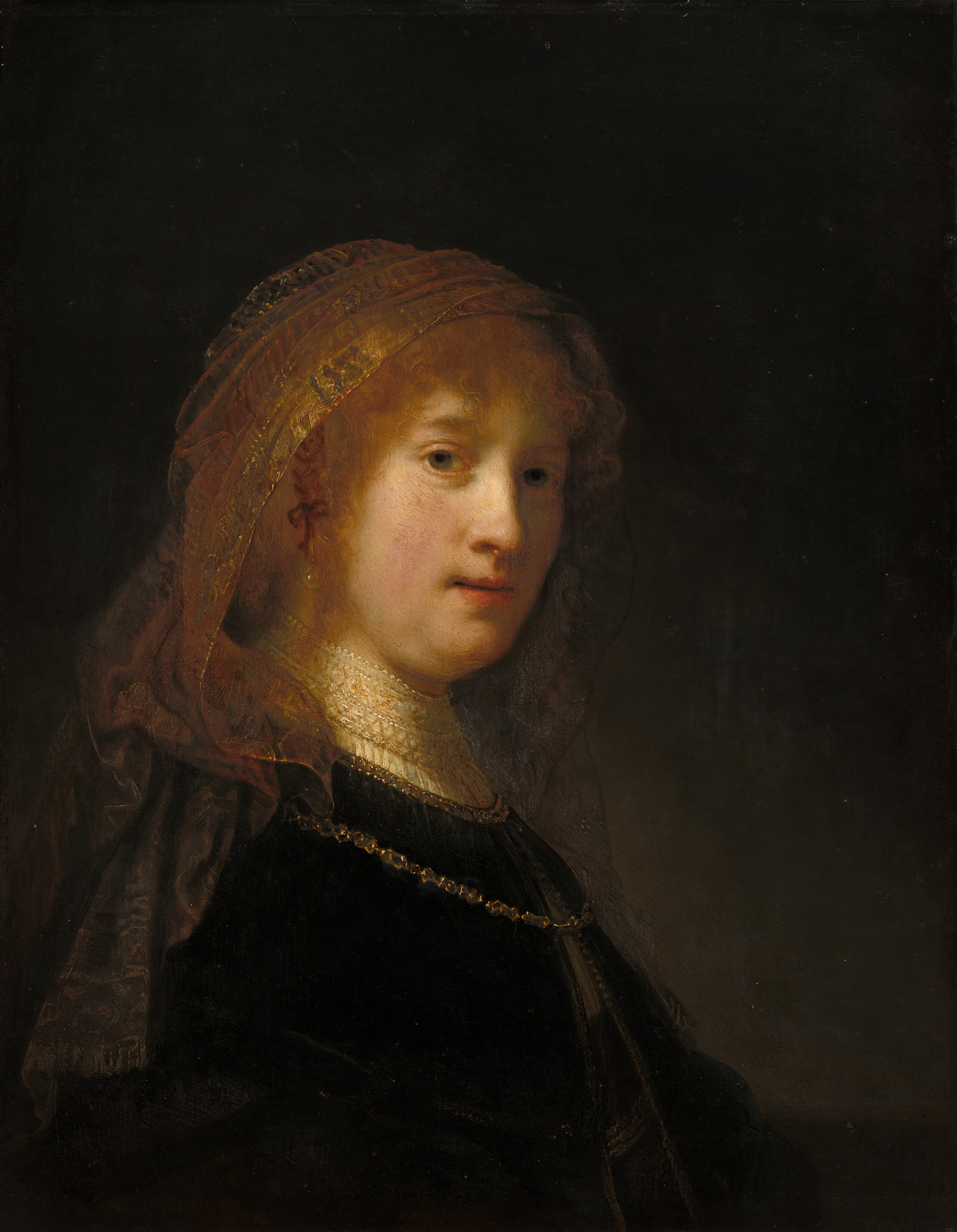
Saskia van Uylenburgh, the Wife of the Artist, probably begun 1634/1635 and completed 1638/1640
Abraham Kuyper once wrote that:
“if you confess that the world once was beautiful, but by the curse has become undone, and by a final catastrophe is to pass to its full state of glory, excelling even the beautiful of paradise, then art has the mystical task of reminding us in its productions of the beautiful that was lost and of anticipating its perfect coming luster.”
Abraham Kuyper, Lectures on Calvinism
This vision of art, I think, is much more helpful than either the subjective pride of modern art or the world-denying tendencies of evangelicals. It recenters the making task on honoring God’s work and world, as well as finding, in the slow work of reflection and representation, a whisper of the world that is coming. This is done by pointing to the goodness of nature, the mystery of God’s creation, and what it would mean to live in God’s presence.
Such envisioning means that our art will be working toward the “new wineskins” that is coming our way. It means that our art will be about “whatever is true, whatever is honorable, whatever is just, whatever is pure, whatever is lovely, whatever is commendable, if there is any excellence, if there is anything worthy of praise” (Philippians 4:8). Because in whatever is true, whatever is honorable, whatever is just, whatever is pure, whatever is lovely, and whatever is commendable there is a whisper and a hope of the one who has in him all truth, honor, justice, purity, love, and every good gift, and such a whisper begs us to look beyond ourselves to his return.
True art takes this whisper and turns it into a song. It invites us to learn how to sing it in our everyday lives. It is a tune we once knew well, but forgot in the wilderness east of Eden. And, strangely enough, it is in the wilderness we learn this song again.
Next Week: Sacrifice, Abundance, and Beauty

 Revival and Renewal
Leave a comment